


How to work in Early Childhood Education

Early childhood education typically refers to working in a service that provides care and supervision to children while parents or guardians are at work or unavailable. Working in early childhood education is more than just babysitting. Early Childhood Educators play a fundamental role in shaping the lives and future of children which is why passionate early childhood education workers are essential. The early childhood education sector is expanding with high demand for employees. To start a career a qualification like the Certificate III in Early Childhood Education and Care is required. Working in early childhood education offers so many opportunities for career growth and a vocation where you can actually make a difference in a child’s life.
What does an early childhood educator do?
An early childhood educator has a range of responsibilities to care and supervise children while parents or guardians are at work or otherwise occupied. This can be in long day care, occasional care, family day care or in-home care. Regardless of the workplace, the tasks and responsibilities are similar. The key responsibilities of an early childhood educator worker are:
- Create a safe and nurturing environment: When babies and small children are away from their main caregivers, it is important that the early childhood educator provides a safe and nurturing environment. The setting must be clean, tidy and safe for young children. Being nurturing is a core part of an early childhood educator’s role where they understand and are empathetic to a child’s feelings.
- Satisfy the basic needs of babies, toddlers and pre-schoolers: Basic needs include feeding, changing nappies, helping with hygiene, medical and first aid if needed.
- Planning and implementing early childhood learning: Early childhood educators plan and implement early learning to teach children basic motor skills. This may be play based learning or a structured curriculum.
- Organise fun activities and games: Playtime is important for children so early childhood educators may organise games like hide and seek, counting and spelling games, obstacle courses or creative and dramatic play.
- Supervise outdoor time: When children are having free playtime outside, early childhood educators must move around the play area to supervise all children, regularly scan for any hazards and count children.
- Manage children's behaviour: Early childhood educators manage children’s behaviour by establishing clear routines and boundaries and using positive guidance during conflict. As children learn through observation, early childhood educators also need to model the desired behaviour they want to see in children.
- Preparing food and snacks: Preparing meals for children in an early childhood setting is an important part of an early childhood educators day. Meals and snacks must be nutritious and accommodate the various dietary requirements of children.
Types of early childhood education
Early childhood educators operate in a variety of settings. The main places where early childhood educators are employed are:
- Long day care: These are usually referred to as ‘early learning centres’ or ‘daycare centres’. They are available for children whose guardians are working, studying or need time off for other reasons.
- Occasional care: Occasional care may be found in day care centres or community centres where guardians need time off for appointments, work or to take a break.
- Family day care: This is a specific type of early childhood care where the carer looks after children in their own home.
In home care: Early childhood care in your own home is usually with a nanny or au pair. While a certificate in early childhood education is not legally required, it is highly recommended.
How to become an early childhood educator
To become an early childhood educator, you must have completed a Certificate III in Early Childhood Education and Care, and/or Diploma of Early Childhood Education and Care.
Certificate III in Early Childhood Education and Care
This nationally recognised qualification is the first step towards working in early childhood education. The 12-month, full time course includes on campus study and work placement. With practical and hands-on training, it provides a good introduction to working in an early childhood education role. You will learn about caring for babies and children up to 12 years of age, effective interaction with children, childhood development, first aid, how to provide experiences that support child play and learning, and how to develop positive and respectful relationships with children.
Entrance requirements and pre-requisites
- You must be at least 17 years of age and turn 18 in the year of completion
- Provide a Working with Children check
- Obtain a police check
Career outcomes
- Childhood educator assistant
- Outside school hours aide
- Preschool assistant
- Nanny
Diploma of Early Childhood Education and Care
This qualification prepares students for senior roles in early childhood education and care like early childhood settings, kindergartens and family day care. The 15-month part time course will help you develop the skills and knowledge to plan, implement and manage early childhood education programs, supervise staff and manage volunteers. You will learn how to develop and implement educational programs that ensure child health and safety and support holistic development.
Entrance requirements and prerequisites
- You must be at least 18 years of age
- Have completed the Certificate III in Early Childhood Education and Care
- Prove a current Working with Children check
Career outcomes
- Early childhood educator
- Outside school hours care assistant
- Playgroup supervisor
- Recreation assistant
- Family day care educator
- Nanny
- Early childhood educator
- Room leader
- Centre director
Pathways for career progression from early childhood education
After completing the Certificate III or Diploma of Early Childhood Education and Care you can use this qualification as a pathway to further study to become an early childhood teacher or childhood education trainer. While not officially working in childcare, these are possible options for career advancement.
Early Childhood Teacher
Following completion of the Diploma of Early Childhood Education and Care, you may choose further study to become an early childhood teacher. An early childhood teacher is qualified to teach in kindergarten and requires a Bachelor of Early Childhood Education from university.
Childhood education trainer
A childhood education trainer teaches aspiring early childhood educators by guiding them through their qualifications. This training and educating role is one of the career pathways from the certificate III. To become a childhood education trainer, you need to complete a Certificate IV in Training and Assessment course.
Additional essential requirements to work in early childhood education
While a formal qualification is essential to work in early childhood education, there are additional essential requirements that must be met.
- Work placement: Completing a set number of workplace hours is critical for successful completion of an early childhood education course. Contact early childhood education centres and providers to secure work placement for your course.
- Background checks: You will need to complete a Working with Children Check and National Police Check in order to work in any early childhood setting.
- Vaccination: Vaccination status must be up to date at all times to work in early childhood education . Young babies and children are particularly susceptible to infection and it is your responsibility to protect them in all ways.
Skills you need to work in early childhood education
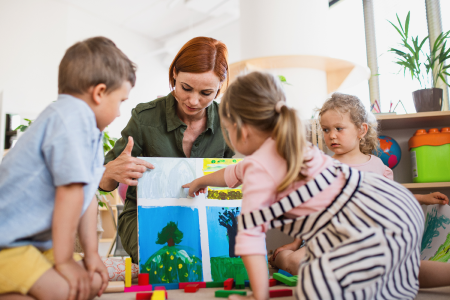
Qualifications and certificates are a great way to start working in early childhood education, however it is preferable if you have these skills for a successful and rewarding career.
- Enjoy being around children
- Good at communicating
- Empathy and compassion
- Patience
- Active listening
- Creativity
- Problem solving
- Time management
- Enthusiasm
- Organisation and practical skills
- Physical stamina
- Reliability
- Enthusiasm
- Energy
How to find work in early childhood education
Armed with the qualifications and skills behind you, here are some ways to find a job in early childhood education .
- Seek and Indeed: Search these major online job and marketplace websites that regularly post roles available for work in early childhood education .
- Victorian Government early learning childhood jobs board: Check the Childhood Jobs website on a regular basis as it is a forum for connecting early childhood educators and employers.
- Recruitment agencies: Certain recruitment agencies specialise in early childhood education and can match you with a role in early childhood education centre .
- Apply directly to early childhood education centres: Use online resources to find local early childhood education centres and then phone, email or go there in person to enquire about potential employment.
- Search for opportunities on Facebook groups: Search for early childhood education roles on Facebook as there are relevant groups that advertise on the social media platform.
- Network: Attend networking events like those run by the Early Childhood Australia Network where you can connect with educators at events.
Working in early childcare education is a fulfilling career that gives you the opportunity to have an impact on the lives of children. The early childhood sector is constantly growing and offers a plethora of possibilities for career advancement. To start working in early childhood education it is essential to have completed a Certificate III in Early Childhood Education and Care at TAFE. You must have work placement, police checks and working with children checks in order to begin an early childhood role. From there you can work in a variety of settings from early childhood education centres to occasional care, family day care and even working in house as a nanny. For further information about how to work in early childhood education, contact the team at South West TAFE.