


How to become a solar installer

To become a solar installer, you will need to be a qualified electrician, accredited with Solar Accreditation Australia (SAA), who has completed the relevant training with a TAFE or Registered Training Organisation (RTO). Solar installers represent a promising career opportunity, particularly for electricians who are looking to specialise in a growing industry. If you're excited by the prospect of becoming a solar installer, read our article below to find out more.
What does a solar installer do?
Before transitioning into your new career, it’s important to understand exactly what a solar installer does. These professionals assemble, install and maintain solar panel systems, on land or on rooftops, playing a vital role in the fast-growing renewable energy sector.
A solar installer conducts site assessments, designs efficient system layouts, and installs all the key components, such as panels, inverters and batteries. They also perform routine maintenance checks and provide support to customers if any issues arise.
Solar installers are the experts in both solar technology and electrical systems. They can guide customers through the process, answer questions, and help new solar owners understand how to get the most out of their system.
Why choose a career as a solar installer?
With the solar industry booming across Australia, becoming an installer could be one of the most promising career paths today. The following are some of the key reasons why more and more electricians are looking to get their solar qualifications:
- High demand - Australia has one of the largest solar industries in the world. With about one in three homes across the country having a system installed and with our plentiful access to sunshine, solar accounts for 18 per cent of our total energy creation. With more than 300,000 new installations on average each year, there is a high demand for professional solar installers to continue delivering new installations.
- Stable job opportunities - Because of this unprecedented demand, professional installers can enjoy a stable career, where their unique skills and experience are continually valued - particularly in the future as the renewable sector continues to grow rapidly with new commercial and residential installations.
- Learn valuable skills - There's also the opportunity to learn important skills, including a technical ability to analyse all the different components of a solar system, as well as valuable soft skills such as problem-solving and attention to detail. This can be a great opportunity for professionals looking to deepen their knowledge of the solar industry, such as qualified electricians looking to get more hands-on skills with solar equipment.
- Career Growth - A great reason to become a solar installer is the opportunities for growth. Once you gain enough experience, installers often move into leadership positions as team leaders or project managers, or even develop their own businesses, with the chance to earn higher wages.
- Contributing to a sustainable future - Becoming a qualified solar installer means joining an industry that’s providing a positive impact to the environment. Because solar energy is completely renewable, it does not produce any harmful greenhouse gas emissions or local air pollution during operation.
Skills needed to become a solar installer
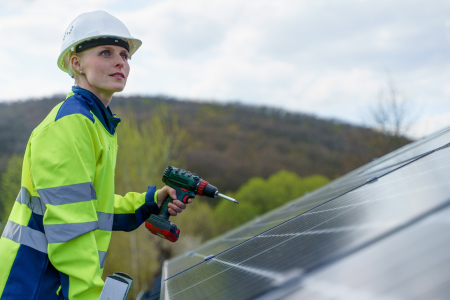
To become successful as a solar installer, you will be required to develop both technical and interpersonal skills. These will typically include the following:
Technical skills
- Understanding of solar energy systems and components - Firstly, you’ll need to develop your understanding of how solar energy systems work and all the varied components. You may know everything about solar panels, inverters, batteries and switchboards and how they function together.
- Electrical knowledge - Becoming a solar installer requires a fundamental grasp of electricity. This should include a basic knowledge of voltage, current, resistance, but also wiring, reading electrical meters and circuit design. To become a solar installer, you need to become a qualified electrician, where these skills can be developed.
- Ability to follow safety regulations and workplace standards - As a solar installer, you will be faced with many potential hazards. Not just electrical challenges, but you will also be required to work at heights on roofing. Ensuring a safe working environment will be essential to preventing any accidents; therefore, installers must have a sound knowledge of regulations and workplace standards.
- Experience with power tools and installation techniques - Power tools and electrical equipment will be central to day-to-day operations. Solar installers will need to understand how to operate cordless drills and screwdrivers, digital multimeters and thermal cameras.
Soft skills
- Strong problem-solving abilities - Problems will present themselves that need to be addressed. Developing problem-solving skills can allow you to properly diagnose these faults and find solutions. These include wiring faults, system defects and equipment failure.
- Attention to detail to ensure precise installations - When installed correctly, a solar system can last for more than 25 years. In order to reach this lifespan, installers will need to add new systems with care, with an attention to detail that ensures every aspect of the installation is given proper attention to generate optimum results. This attention to detail includes making sure your panels are installed with the proper positioning and tilt.
- Good communication skills for explaining systems to clients - Client-facing skills will be a key part of your role. You will need to be able to explain various technical information to customers, especially during the handover process. Strong communication skills can also allow you to properly coordinate with your fellow installers and managers and to communicate any issues that may arise.
- Teamwork - Working as a solar installer, you are rarely alone. Learning how to work well within a team of solar professionals and respecting the contributions of others can make a sizable improvement to the quality and efficiency of your installations.
How do you become a solar installer?
Becoming a certified solar installer can be a long process that requires constant learning and the accumulation of experience. To start in your new career, you will need to obtain two major qualifications: an electrical license and accreditation with Solar Accreditation Australia (SAA).
- Earn your electrical licence - An electrical licence is an essential qualification for work as a solar installer, because the role relies heavily on electrical equipment and technology. To become a qualified electrician, you will need to finish a Certificate III in Electrotechnology Electrician course, which is a four-year apprenticeship that provides you with hands-on experience. Once your apprenticeship is complete you can apply for an electrician’s licence. Read our article here for more information on this step.
- Complete training in solar - The next step is to complete the required training from a registered training organisation (RTO). This will cover all the necessary skills and knowledge required to operate safely and efficiently, including how to conduct a site survey, how to work safely at heights and how to install photovoltaic systems. You can find a comprehensive list of available courses from an RTO by visiting the Clean Energy Council (CEC) website here.
At South West TAFE, our Grid-Connected Photovoltaic Systems Designer-Installer Skill Set (UEESS00194) equips you with the essential skills for working in the solar industry, including safe practices, system design, installation, and site surveying. - Apply for provisional solar accreditation - Once you have completed your RTO course, you can move to applying for provisional accreditation. Make sure you have all the required documents needed to be accredited, including your RTO training certificate, electrical license and a certificate of working safely at heights. Depending upon who you are getting your accreditation from, you will also have to make a payment. For example, provisional accreditation from the CEC will cost you $182. Once these documents are all submitted, and you’ve made your payment, you will be provisionally accredited.
- Pass online - To demonstrate your knowledge, you will now need to complete an online assessment which takes about 60-90 minutes to complete with a maximum of two hours. Here is a link to the application process.
How much do solar installers make?
Within Australia, the average salary for a solar installer is approximately $108,021 per year, or $43.65 per hour, based on reported salaries. This can range depending upon your level of experience, as those just starting out in the industry should expect to earn between $60,000 to $80,000.
The more experienced you become, the higher your expected salary. Solar installers who are SAA-accredited electricians with considerable experience can command greater wages of over $120,000. This can grow even more if you choose to develop your own business for solar installations.
How to advance your career as a solar installer
To advance your career, it’s vitally important for solar installers to continually upskill themselves to stay competitive. Particularly within the solar industry, where new technology is constantly being introduced, staying informed about the newest trends and developments can serve you well. For instance, solar is continuing to embrace computer-based software to monitor the performance of your panels. Understanding how these systems work could give you a competitive edge.
Networking with fellow professionals is another great way to open up new opportunities and learn new perspectives, allowing you to exchange information to stay connected to any shifts in technology or employment opportunities.
You may also gain new experience by taking extra courses to broaden your knowledge. For instance, you may want to gain a greater expertise in solar batteries or off-grid systems, with courses available that can further hone these particular areas.
All of these steps may serve you well in your new career, setting you apart from other professionals to open doors for leadership positions and potentially owning your own business.
Becoming a solar installer can be a lengthy process, but it can open the door to an exciting industry that’s only going to grow in the future. By understanding the steps to becoming a fully-qualified solar installer and the necessary skills and experience, you can ensure you’ll hit the ground running. If you would like to find out more, please contact South West TAFE.